Jesus gave His listeners a deadline.
Not a code for people living two thousand years later. Not a promise that could be postponed indefinitely. A deadline attached to the people standing in front of Him:
“Truly I say to you, this generation will not pass away until all these things take place.”
For most of my life, I was taught to read that promise while waiting for its fulfillment. The return was ahead of us. The tribulation was ahead of us. The decisive events of Revelation belonged to a future that never quite arrived.
But what happens when we stop moving the deadline and start following the history?
We find Jerusalem surrounded by armies. We find the temple destroyed. We find Jewish and Roman historians describing armies in the clouds. Then the story continues: an imperial power demanding worship, its final ruler brought down, a thousand-year interval, a war drawing nations toward Jerusalem, fire descending into an army, and Jewish testimony describing immediate entrance into the presence of God.
After that comes an era of extraordinary upheaval—and a vision of heaven joining earth rather than abandoning it.
This is the cumulative case. Not one unusual event carrying the whole argument. A sequence in which the next question leads to the next historical answer.
The strongest test of the return is not only what happened in the first century. It is what happened next.
1. The promise had an audience—and Jerusalem had a deadline
Jesus did not leave His followers with a vague warning that something terrible would happen somewhere, someday.
He named the city. He named the temple. He told them what to watch for and what to do when they saw it:
“But when you see Jerusalem surrounded by armies, then recognize that her desolation is near.”
The warning came with an escape route. Leave. Do not remain inside a city moving toward catastrophe.
In 66 AD, Cestius Gallus advanced on Jerusalem and then withdrew. That retreat opened a window. Eusebius records the early believers’ flight to Pella. The war that followed brought the devastation Jesus had described: factional violence, famine, slaughter, and the destruction of the temple in 70 AD.
Josephus records a city consuming itself while Rome closed in. Rival factions destroyed food supplies. Starvation dismantled ordinary human life. The dead accumulated until soldiers climbed over bodies in pursuit of the living.
The temple did not survive as a monument to a prophecy still waiting for its date.
It burned.
But the destruction of Jerusalem answers only part of the question. Jesus also spoke of His coming in power and glory. If the deadline belonged to that generation, where is the historical record of the signs?
It is closer than most of us were ever told.
2. The armies in the clouds were recorded
In The Jewish War, Josephus interrupts his account with a report he knows his readers will struggle to believe:
“Besides these, a few days after that feast, on the one-and-twentieth day of the month Artemisius, a certain prodigious and incredible phenomenon appeared; I suppose the account of it would seem to be a fable, were it not related by those that saw it, and were not the events that followed it of so considerable a nature as to deserve such signals. For, before sunsetting, chariots and troops of soldiers in their armor were seen running about among the clouds, and surrounding of cities.”
Read the whole passage. Josephus does not simply mention an unusual light. He describes armed troops and chariots moving among the clouds and surrounding cities. He anticipates disbelief, appeals to those who saw it, and connects the sign to the magnitude of what followed.
And the report does not exist only in Josephus.
Tacitus writes:
“In the sky appeared a vision of armies in conflict, glittering armour.”
A Jewish historian. A Roman historian. Neither writing a Christian sermon. Both preserving reports of heavenly armies in the first-century setting of Jerusalem’s judgment.
Eusebius later preserves Josephus’ account. The Hebrew tradition of Yosippon carries the memory forward. The event did not vanish because nobody wrote about it. It vanished from the framework through which many of us were taught to read the return.
These signs belong to 66 AD, within the generation Jesus addressed. The war culminates in the temple’s destruction in 70. The first-century case concerns that whole season of warning, appearing, escape, and judgment—not a demand that every part occur on the same afternoon.
The coming also meant more than devastation. Revelation 19 joins judgment to the wedding of the Lamb. For those who belonged to Him, the Bridegroom’s coming meant gathering and union.
Then Revelation moves into the reign.
And that is where the argument gains another dimension. If the coming has happened, the events that follow it should leave their own marks in history.
Explore the first-century evidence →
3. Why the millennium begins with the Beast—not the burning temple
Revelation 20 does not introduce its thousand years as a detached symbol floating above the story. It describes a sequence: Satan bound, the saints reigning, the rest of the dead awaiting life, and Satan released when the period is complete.
The thousand years are repeated six times. They have a beginning, a duration, and an end. The surrounding actions give the number its temporal weight.
But the starting point matters.
Immediately before the millennium, Revelation 19 describes the judgment of the Beast and the False Prophet. That means we cannot simply choose the temple’s destruction as the opening date and ignore the event the text places before the reign.
To find the clock’s starting point, we have to identify the Beast.
The Beast demanded worship
Revelation repeatedly describes worship of the Beast, its image, and the authority it exercises against the saints. The issue is not government alone. It is government claiming what belongs to God.
That brings us to Rome’s imperial cult: the machinery that turned allegiance to Caesar into religious devotion.
Nero supplies a personal identifying mark. Revelation 13 gives the number 666. The Hebrew-letter rendering of Neron Kaisar supplies that total; the alternate form of Nero’s name accounts for the 616 reading preserved in some manuscripts. The number belongs inside the first-century imperial world, not to a succession of modern personalities selected to fit the latest headline.
But Nero is not the end of the imperial sequence.
Why the eight rulers matter
Revelation 17 describes five fallen kings, one who is, another who remains briefly, and an eighth who belongs to the seven.
The sequence follows the Caesars associated with the imperial cult, rather than counting every person who temporarily occupied the throne:
- Augustus, Tiberius, Caligula, Claudius, and Nero: the five who have fallen.
- Vespasian: the ruler at the prophetic vantage point of Jerusalem’s destruction.
- Titus: the successor whose reign lasts only a short while.
- Domitian: the eighth, reviving the same demand for divine allegiance.
That selection is not incidental. Worship is the thread connecting the rulers to the Beast’s defining character.
Domitian brings the pattern into sharp focus. He demanded the title Dominus et Deus—“Lord and God”—and renewed the imperial cult’s claim over human allegiance. In him, the persecuting power seen in Nero rises again.
His assassination in 96 AD supplies the hinge: the fall of the final ruler in this prophetic sequence, followed by the thousand-year reign.
Now the next date is not selected from a catalogue of interesting medieval events. It follows from the interval itself:
96 AD + 1,000 years = 1096 AD.
What begins in 1096?
The First Crusade.
Follow the millennium argument →
4. The thousand years end—and the nations gather
The millennium was not a promise that every nation would enjoy an earthly utopia. Revelation describes the reign of souls with Christ and the restraint of Satan’s deception of the nations. Ordinary history continues during that reign.
At its end, however, the character of the story changes. Satan is released. The nations are deceived. Gog and Magog gather for war against the camp of the saints and the beloved city.
The year 1096 opens precisely that kind of upheaval: a multinational religious war moving toward Jerusalem.
Its religious language must not hide its character. The Crusade begins with the Rhineland massacres. Jewish communities are attacked by people claiming to act for Christ. What follows includes the horrors of Ma‘arrat al-Numan and the slaughter accompanying Jerusalem’s capture.
This is not the arrival of an army whose religious label makes its violence righteous.
It is the terrible effectiveness of religious deception.
The conflict has a lead-up—and two sites
Ezekiel’s account brings the northern coalition into view. The Seljuk advance, the regions associated with its reach, its mounted warfare, and the earthquake-and-invasion sequence form the lead-up to the wider conflict. The war does not begin from nowhere when European armies start marching.
Nor does recognizing the Seljuk movement as Gog turn the Crusaders into God’s innocent counterpart. East and West are drawn into the same spreading deception. Different banners do not make one side’s cruelty holy.
Revelation names both the camp of the saints and the beloved city. The historical sequence brings two places into focus: Antioch and Jerusalem.
Antioch was a cradle of the early church, the place where the disciples were first called Christians. During the Crusade, it becomes a literal encampment under siege. Jerusalem remains the beloved city toward which the campaign moves.
That distinction matters because the fire belongs to Antioch.
Fire falls into the army
In June 1098, the siege of Antioch produces one of the most striking reports in the entire sequence.
Peter Tudebode records:
“…in the night a fire from heaven appeared, coming from the west, and it fell into the camp of the Turks; all saw it, both ours and theirs. In the morning the Turks, very terrified, fled.”
Raymond d’Aguilers records:
“At that time many revelations occurred to us through our brothers, and we saw a marvelous sign in the sky. For a certain very large star stood over the city during the night, which shortly after was divided into three parts, and fell into the camp of the Turks. Our men, therefore, were strengthened somewhat…”
The Gesta Francorum and Robert the Monk also preserve accounts of the descending fire. The recurring features are concrete: it comes from the sky, moves toward the Turkish positions, falls into the army’s camp, and provokes fear.
Revelation’s fire is no longer an image we can discuss without confronting the historical record beside it.
Keep the dates straight. 1096 begins the campaign. The Antioch fire belongs to 1098. Jerusalem falls in 1099. The thousand-year interval fixes the outbreak of the war; the campaign then unfolds through the places and events that give the correspondence its depth.
The aftermath matters too. Ezekiel’s account continues beyond the battle into burial, the disposal of weapons, and restoration. The book follows that wider arc through to Saladin’s reopening of Jerusalem to Jewish settlement in 1187.
This is not one medieval battle chosen because it contains a bright object in the sky. It is a connected argument about timing, coalition, targets, fire, and what follows.
5. At the same hinge, the language of death changes
Revelation places another event at the end of the thousand years: the rest of the dead come to life.
That moves the investigation from armies and rulers into a different kind of record.
While researching the 1096 massacres, I encountered Shmuel Shepkaru’s study, Christian Resurrection and Jewish Immortality during the First Crusade. Its subject was exactly where the timeline had brought me: Jewish testimony about death and heavenly life associated with 1096.
The change is startling. Instead of describing the righteous only as awaiting a future bodily resurrection, the accounts speak of immediate ascent into God’s presence.
Solomon bar Samson writes:
“They went up in sanctity and purity to the heavens above, and were received beneath the Throne of Glory.”
Another account urges:
“Come and lie in the bosom of Abraham our father, for in one hour you shall acquire your world and come into the circle of the pious and the righteous.”
Even the familiar language of Abraham’s Bosom now carries immediacy. Not a distant reward after an indefinite sleep. Entry into the world to come.
This is the historical fingerprint of the change Revelation describes: the waiting ends. The rest of the dead come to life. Death and Hades do not remain permanent authorities over God’s creation.
The book develops the distinction between the two resurrections and the covenantal timing behind them. Here, see the force of the connection: after the thousand-year interval brings us to a war of nations, a separate body of Jewish testimony brings us to immediate heavenly life at that same historical hinge.
The sequence is no longer confined to military history.
6. Then the earth convulses
Revelation does not stop with the end of the waiting realm. It moves into a new heaven and a new earth.
What does that look like in the world we can examine?
Between 1100 and 1300 AD, the record reveals not a single isolated catastrophe but a sustained convergence: major eruptions, repeated seismic destruction, darkened skies, disrupted temperatures, failed harvests, famine, and upheaval across regions and generations.
The volcanic evidence matters because it survives beyond the chroniclers. Ice cores preserve the sulfur signals. Tree rings preserve the stress on growing seasons. Contemporary accounts preserve what the disruption meant to people trying to plant, harvest, and stay alive.
Samalas erupts in 1257—an event of extraordinary scale. But the larger story is the cluster around it: repeated climate-impacting eruptions arriving across the twelfth and thirteenth centuries, compounding disruption rather than allowing a simple recovery from one disaster.
The Eastern Mediterranean also endures a succession of devastating earthquakes. Cities, agricultural systems, trade, and ordinary life are shaken repeatedly. Across the wider record, famine and displacement magnify the damage.
The significance is not merely that the earth has volcanoes and earthquakes. It is the concentration and persistence of upheaval in the period reached by the preceding sequence.
Passing away is not the deletion of creation
If we assume “a new earth” means God discards the planet and manufactures another, the continued existence of this earth becomes an automatic objection.
But the book follows the language of transition: the passing of an age and its order, not the annihilation of atoms.
The old world passes. Creation is not abandoned.
That is also why Matthew 5 matters. Jesus tied the Law’s horizon to the passing of heaven and earth and the accomplishment of what it anticipated. This is not a disaster catalogue tacked onto the end of Revelation. It belongs to the change from the old order into the life of the new.
Explore the forgotten cataclysm →
7. The destination is not destruction. It is union.
The sequence ends somewhere very different from the escape story many of us inherited.
The New Jerusalem comes down.
Heaven’s movement is toward earth. The city is also the Bride: a people joined to God, not a building waiting to become someone’s wife. God’s dwelling is with humanity. The gates stand open. The river gives life. The leaves are for the healing of the nations.
This is the culmination, not an ornamental scene after the important destruction is finished.
The return leads to union. The reign leads beyond the old captivity. The passing order gives way to a world into which heaven’s life continues to flow.
The New Jerusalem is not our excuse to abandon the world. It is the reality that changes how we inhabit it.
Look at the whole sequence
A siege alone can be isolated from the rest of the argument. So can a heavenly sign, an emperor’s death, a medieval war, or an eruption.
But isolating each piece is not the same as answering the case.
The case concerns the connections:
- The generation Jesus addressed experiences the war, the signs, and Jerusalem’s judgment.
- The Beast’s imperial sequence brings the chronology to Domitian and 96 AD.
- The thousand-year interval reaches the beginning of the First Crusade in 1096.
- The gathering of nations unfolds through the northern advance, Antioch, Jerusalem, and the reported fire.
- The testimony surrounding 1096 speaks of immediate entrance into heavenly life.
- The following centuries bring sustained upheaval and the passing of the old world’s order.
- The vision’s destination is heaven joining earth and God dwelling with humanity.
The book’s Yahtzee illustration makes this cumulative force accessible: the challenge changes when the pattern repeats. It is no longer enough to explain why one detail, considered alone, might resemble something else. The whole arrangement demands an answer.
And the sequence also works backward.
If the thousand-year reign has run its course, then the coming that precedes it cannot still be waiting in our future. If the events after the return already belong to history, continuing to postpone the return means disconnecting it from the very story that follows it.
Jesus did what He said He would do. He returned.
The Kingdom is not waiting for permission to begin. The Bridegroom has not forgotten His promise. Heaven is not withholding its life until the world becomes bad enough to destroy.
The question is no longer how much longer we must wait.
The question is how we will live now that the Kingdom is here.
Want the full picture?
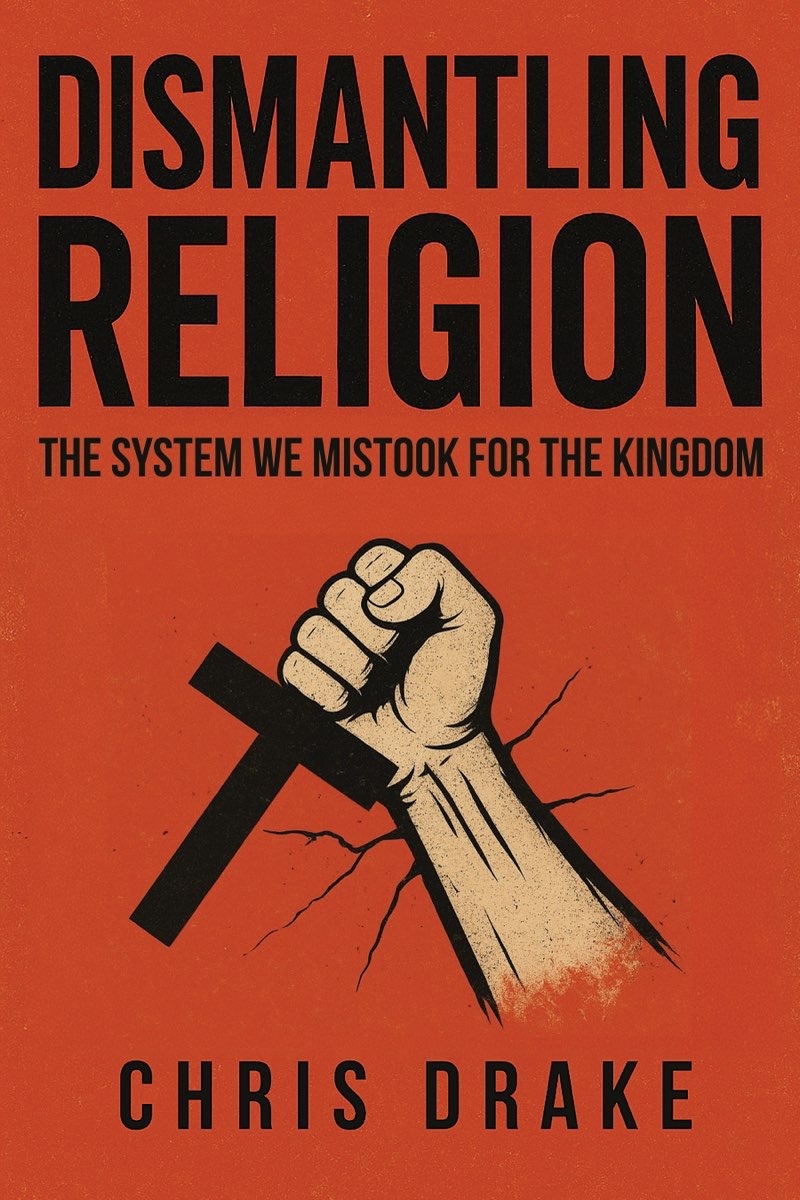
Dismantling Religion: The System We Mistook for the Kingdom develops the connected case across the first-century signs, the imperial sequence, the millennium, Gog and Magog, the two resurrections, the forgotten cataclysm, and the New Jerusalem.
Read the sources. Follow the connections. Examine the whole argument.
Read Dismantling Religion on Amazon →
For the dated source trail, visit the historical source timeline. To discuss the argument, join The Foundation.